Aluminium gates: the complete guide.
Aluminium isn’t part of our core bespoke materials palette — that’s still wrought iron, mild steel, oak, iroko, Accoya and bronze, covered in full in our materials chapter. But it’s the material behind three of our named designs, chosen deliberately for what it does better than the alternatives: it’s light, it doesn’t corrode, and it costs less to fabricate.
No galvanising, because it doesn’t need it.
An aluminium gate is built from extruded aluminium sections, jointed and welded into a frame, then finished with polyester powder coating — the same final step as our steel and iron gates. Where it differs is everything before that finish: aluminium doesn’t rust, so it skips the hot-dip galvanising stage entirely. The oxide layer that naturally forms on the metal’s surface is the corrosion protection, not an added coating.
That has two real consequences. First, it’s genuinely low maintenance — there’s no bare metal underneath the paint to worry about if it gets chipped, unlike a galvanised steel or iron gate. Second, it’s light. A long aluminium gate leaf weighs a fraction of the equivalent in steel, which matters most where the automation has to do more work — long spans, and cantilever sliding systems in particular.
Weight is the whole reason aluminium suits a cantilever gate. The counterbalance system already has to carry the full weight of the leaf unsupported at one end — every kilogram saved on the gate is less strain on the motor, for the life of the installation.
Not better or worse — a different set of trade-offs.
Wrought iron and steel offer hand-forged character and a traditional look — see our wrought iron guidefor the full comparison there. Aluminium trades that traditional weight and detail for lightness, corrosion resistance, and a cleaner contemporary line. Neither is the “better” material — it depends on the property and the mechanism.
What we actually build in it.
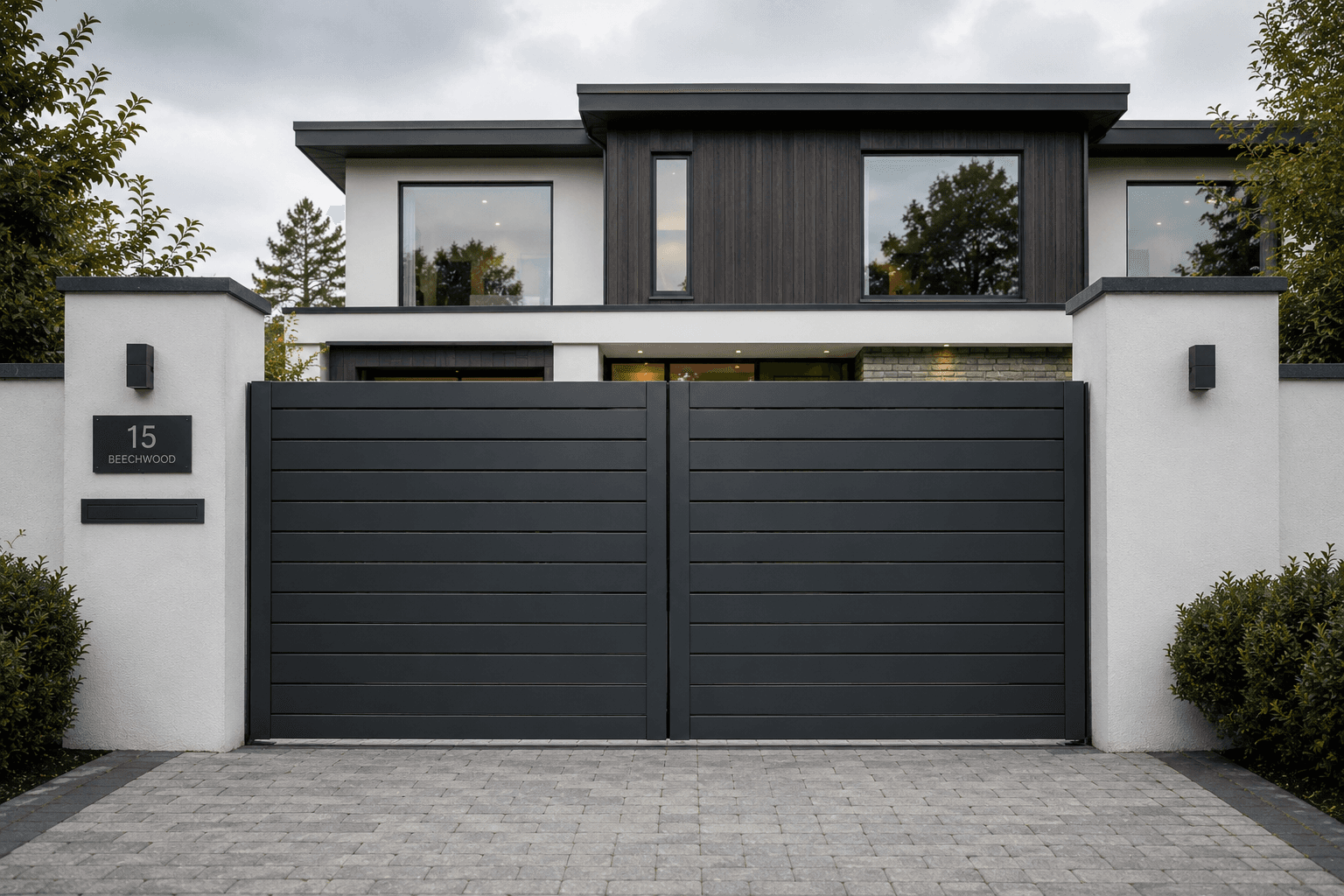
A clean horizontal slat design for contemporary homes — light enough to suit longer openings, and wipes clean in seconds. View the collection →
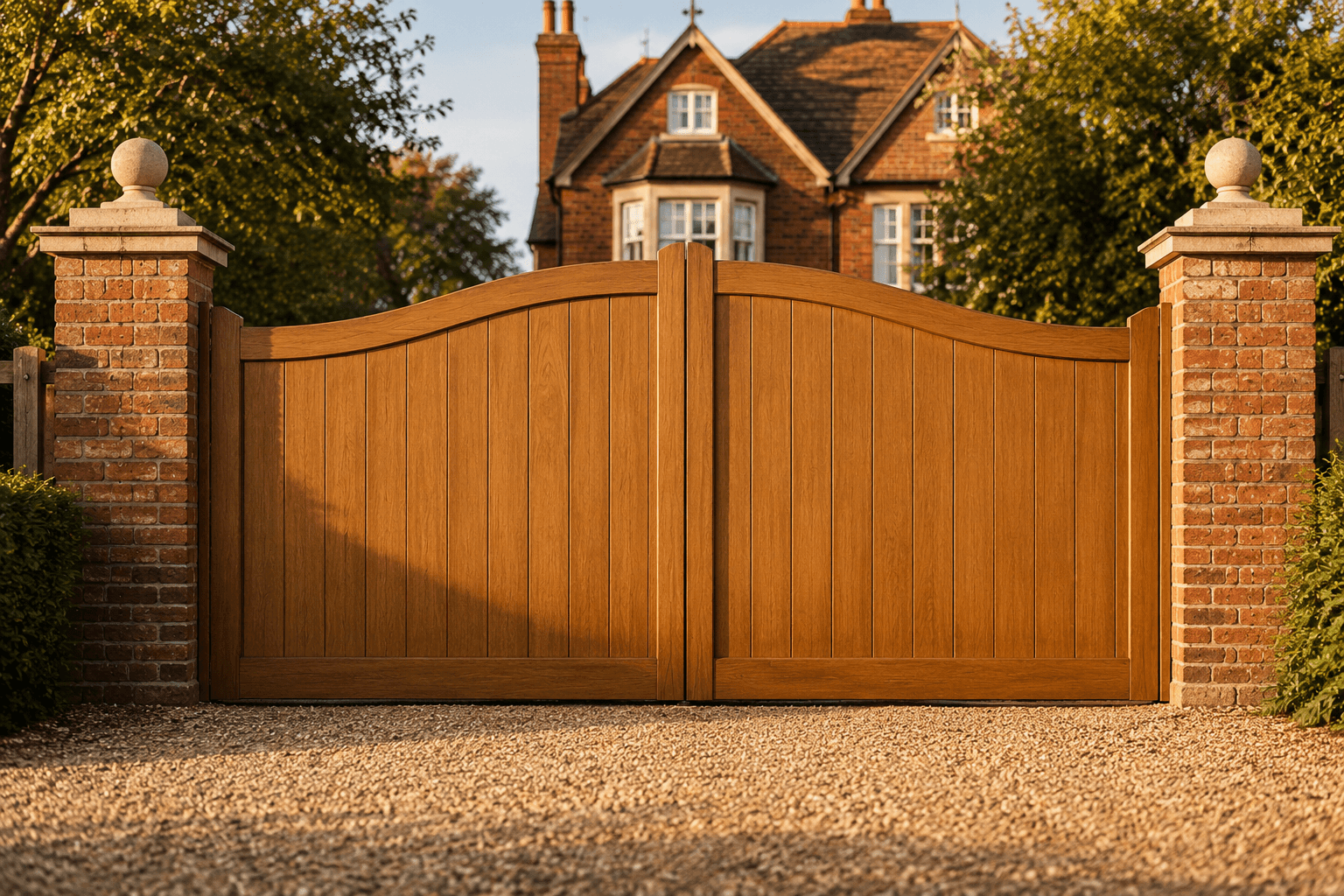
The same aluminium construction as the Broxbourne, finished in a textured powder coat that replicates the grain and warmth of real timber — without the maintenance. View the collection →
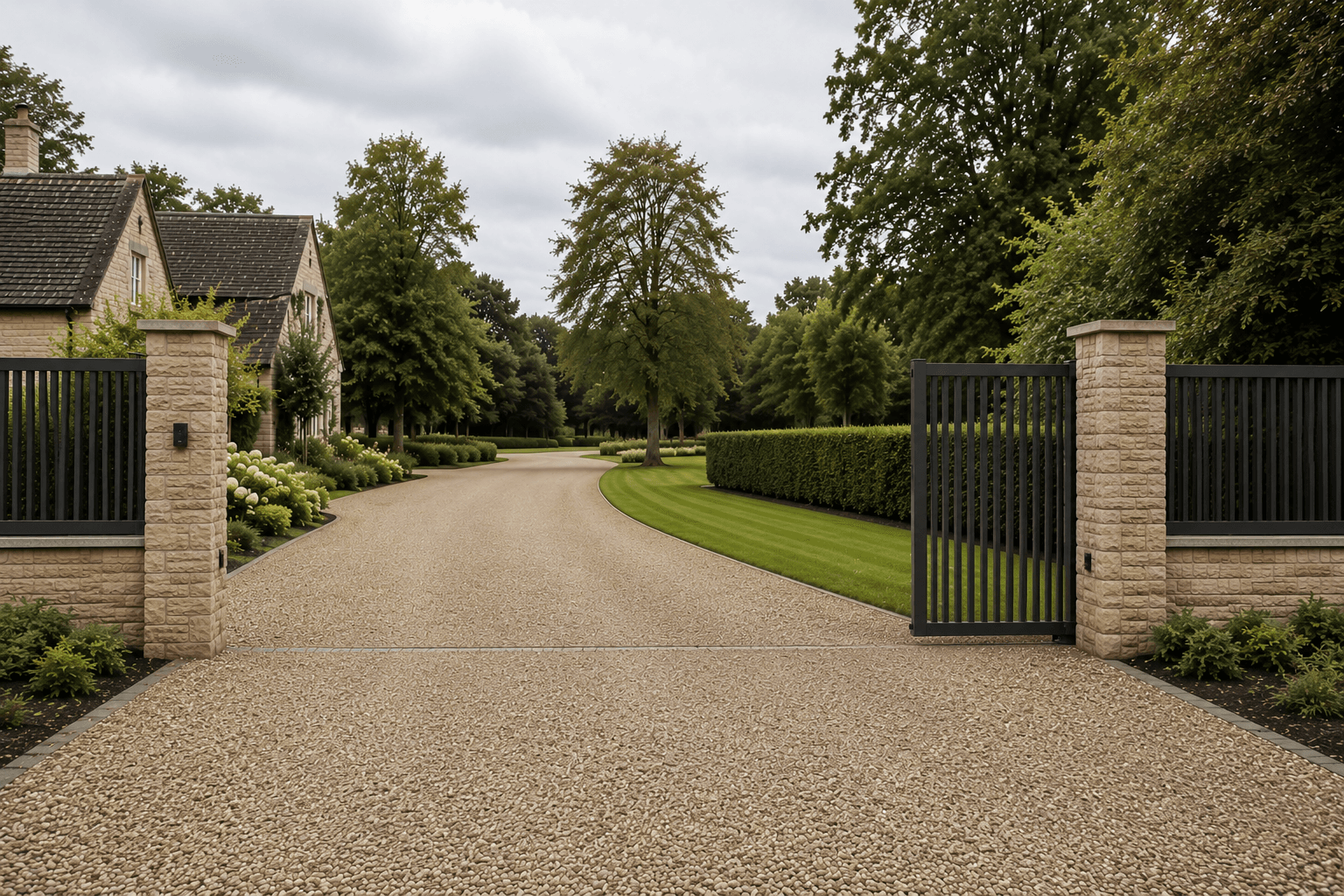
Aluminium chosen specifically for its light weight, which suits the cantilever mechanism and reduces the load on the motor — ideal for restricted plots or sloping ground. View the collection →
The lowest-maintenance material we offer.
Because there’s no bare metal to protect underneath the finish, an aluminium gate genuinely doesn’t need the touch-up discipline that iron and steel do. A wipe down removes most dirt, and there’s no repainting cycle to plan for. The annual service still covers the automation and safety systems — see our servicing chapter — but the gate itself asks very little of you.
Is aluminium as strong as steel or iron?+
For the loads a driveway gate actually carries, yes — aluminium gates are engineered to the same structural standards. What it doesn't have is the mass of steel or iron, which is a genuine advantage for automation: less weight means less strain on the motor over the gate's lifetime.
Does aluminium rust?+
No. Unlike steel or iron, aluminium forms its own protective oxide layer naturally and doesn't need galvanising. It's one of the reasons it's low maintenance — there's no finish to touch up if it gets chipped, since there's no bare metal underneath to corrode.
Can aluminium look like timber?+
Yes — The Hatfield uses a textured, wood-effect powder coat that replicates the grain and warmth of natural timber on an aluminium frame. See the Hatfield collection for the finish in detail.
Is aluminium available for a fully bespoke gate, not just these three designs?+
It can be specified by special commission outside our three named aluminium collections. Ask at your site visit if you'd like to explore it — our core bespoke palette is wrought iron, mild steel, oak, iroko, Accoya and bronze, but aluminium is available where the project calls for it.
How much does an aluminium gate cost?+
Our three aluminium collections start from £3,500 to £4,200 installed. A fully bespoke aluminium commission would follow the same published bands as any other gate — see our cost guide for the full breakdown.